


Welcome!
This website documents the construction and performance of our "green built" home in Middleton, WI. Acker Builders completed construction on November 16, 2009. On this site you can find real-time solar panel output, photos during and after construction, and a description of the techniques used to improve indoor air quality and maximize energy efficiency.
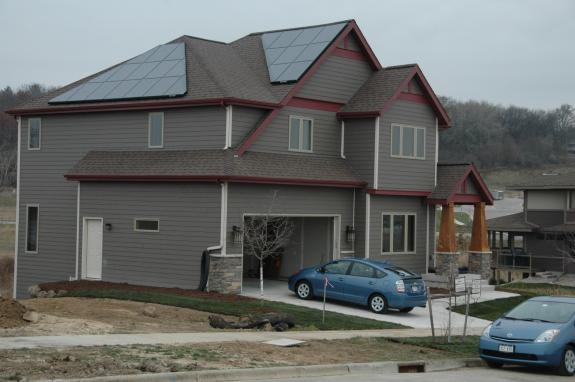
It's official - Green Built Home
Posted Thu, 02/18/2010 - 19:32 by kpbadger
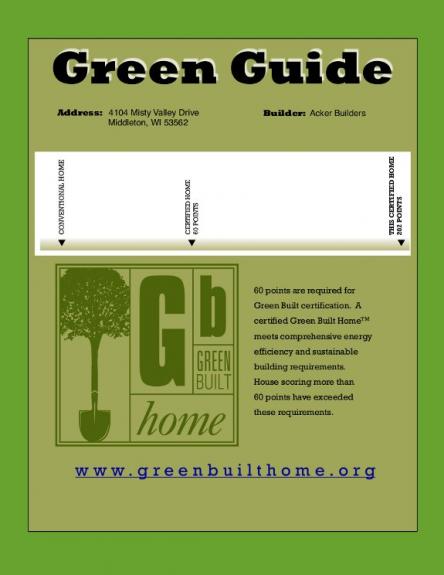
Today we received our official certificate from the Green Built Home program!
Real-time solar generation stats available
Posted Wed, 02/03/2010 - 13:09 by kpbadger
Check out the upper right corner of the middletongreenhome.com main page, and you can see our real-time solar array generation stats!
The folks at H&H solar installed our "Fronius Interface Card Easy" on Monday, which allows real-time querying of the inverter via serial connection. We have a home computer polling the interface for its current power output every 3 seconds, and uploading this data to the website. The day's generation is then calculated from the statistics gathered.
Rain water retention system
Posted Fri, 11/20/2009 - 12:05 by kpbadger
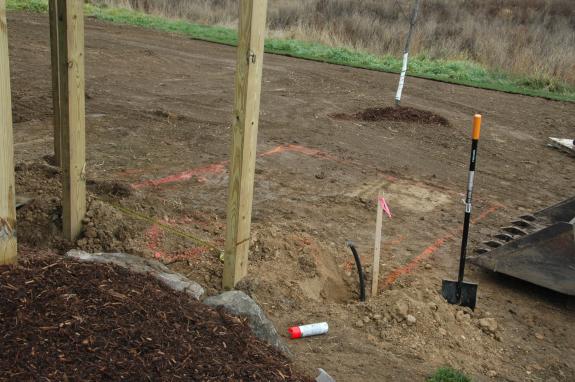
As part of our landscaping, we have added a 1500 gallon collection basin for rain water that runs off the roof. Approximately 1.5 inches of rainfall will fill this basin. A pump will then make the water available for lawn and plant irrigation. (The pump will be installed next spring.)
The retention basin is outlined and excavated.
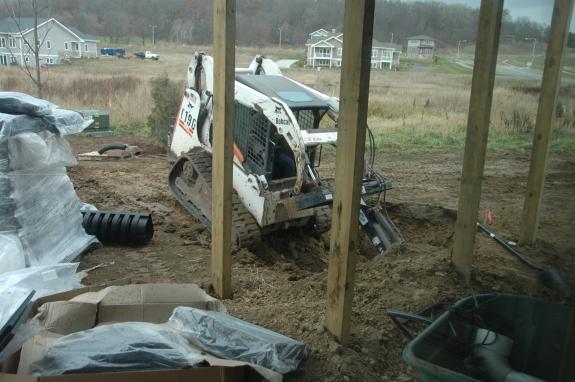
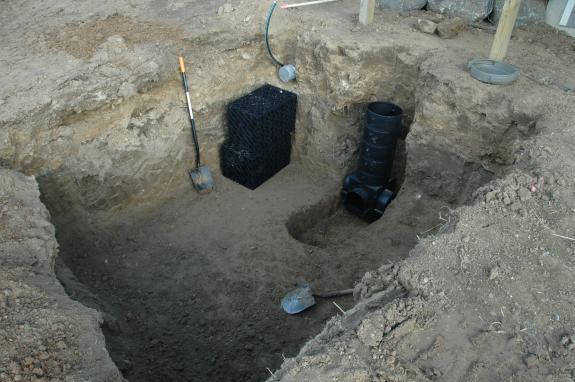
Instead of a tank, "AquaBlox" modules and a plastic liner are buried in the ground. This modular system is assembled on-site.
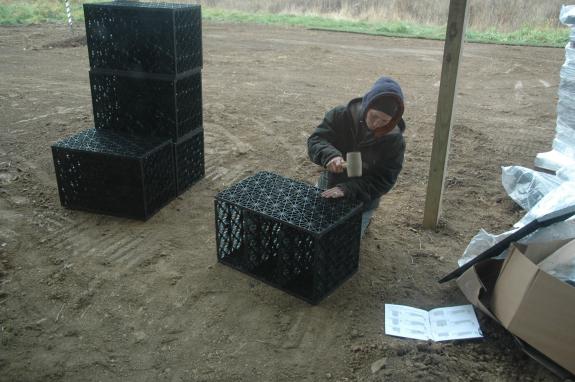
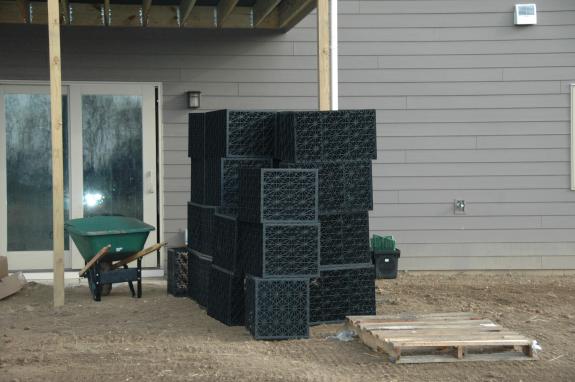
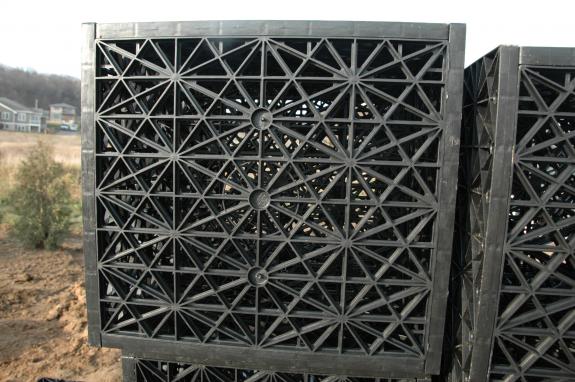
A total of 48 "AquaBlox" are buried.
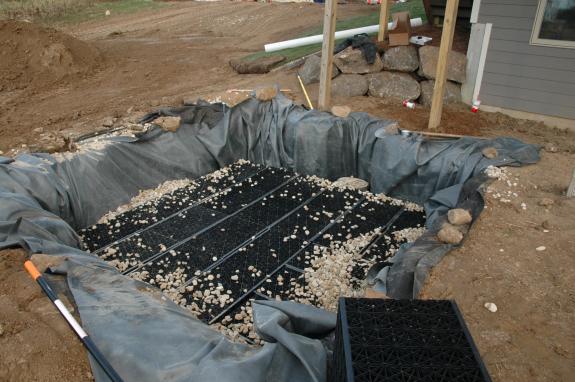
Once this was completed, this entire setup was covered with gravel and then buried under the sod that was eventually installed. We will provide more information about this system on the Water Conservation page.
Solar installation complete
Posted Tue, 11/17/2009 - 23:22 by kpbadger
Today, the connection of our solar system to the utility grid was completed. Madison Gas & Electric installed the second electrical meter and the system is good to go.
For more information about solar energy in general and our solar project in particular, please visit:
Middleton Green Home solar page
Here are pictures of the installation from the beginning to the finish:
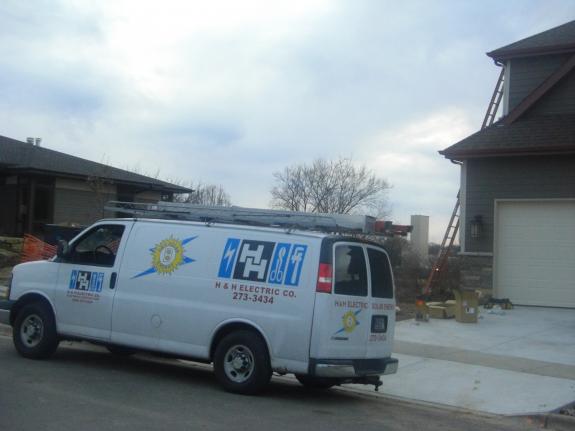
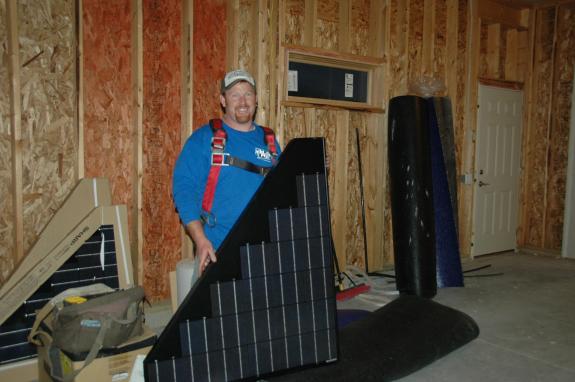
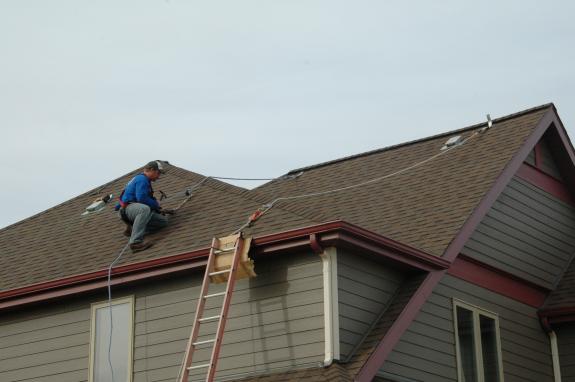
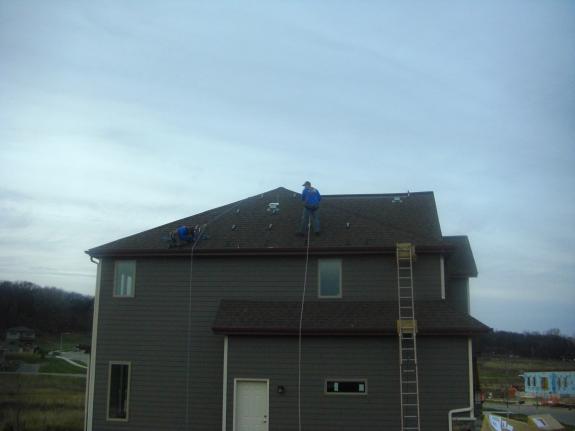
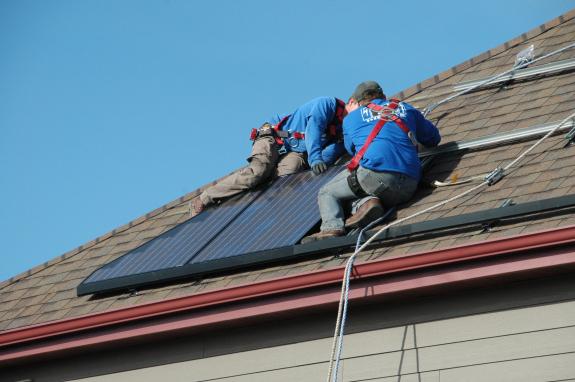
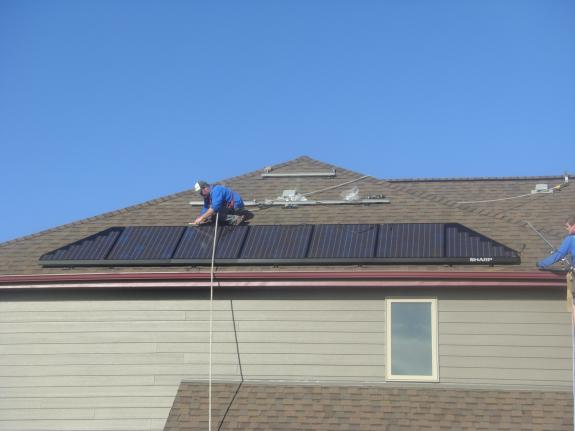
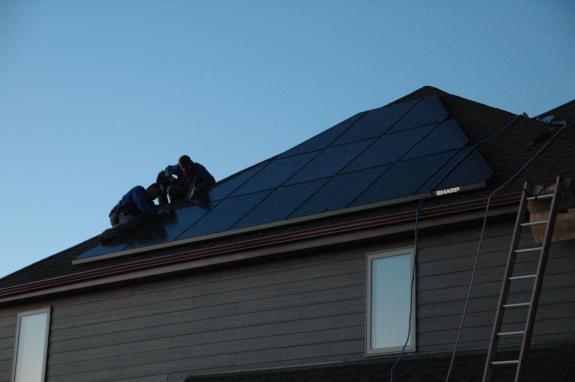
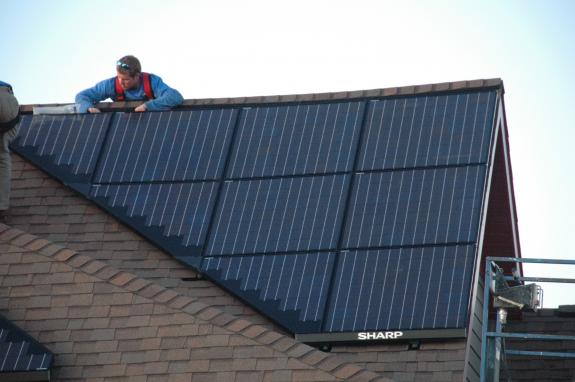
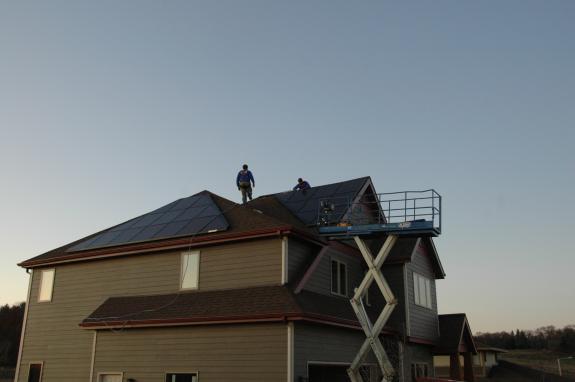
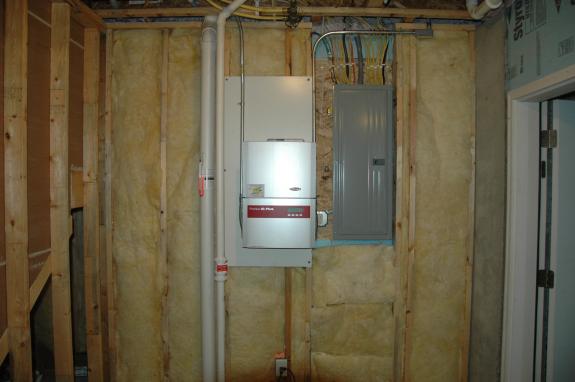
The total capacity of our system is 2.7 KW. The inverter is installed in our basement. The inverter converts direct current (DC) from the solar panels into alternating current (AC) for the power grid. You can see from the side-by-side picture of the inverter next to the breaker box that the inverter is a rather large piece of equipment. And this is one of the smaller inverters available.
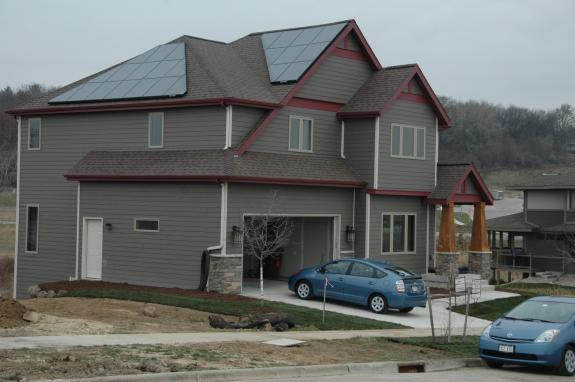
Here is the picture of the completed installation.
Energy Star audit complete!
Posted Wed, 11/11/2009 - 00:03 by kpbadger
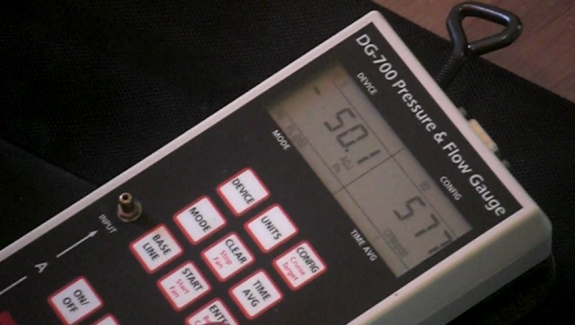
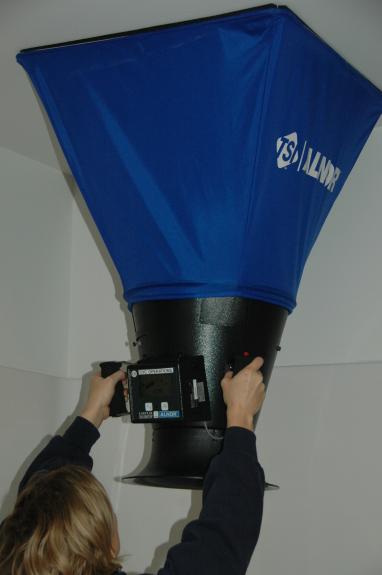
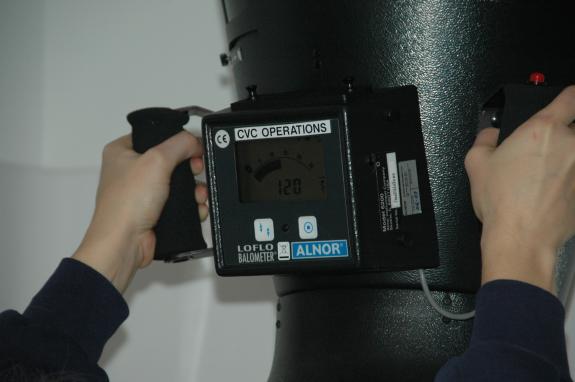
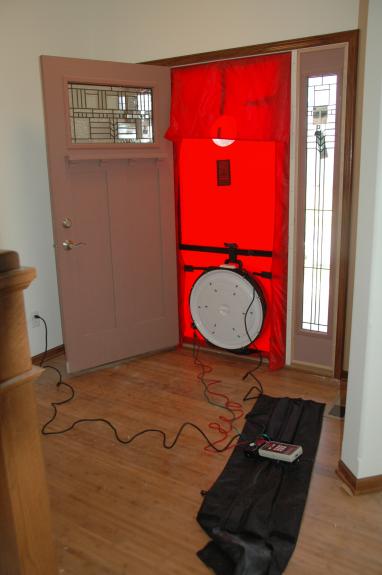
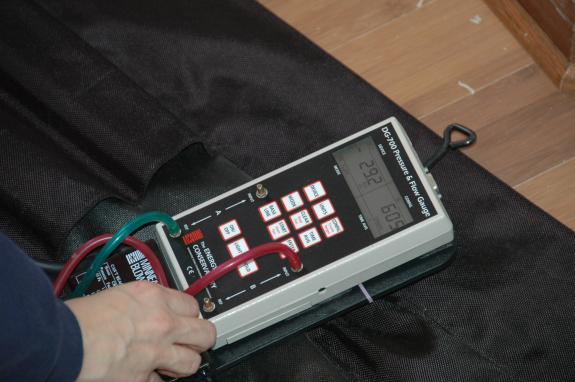
Today was the third and final site visit for Energy Star. This is the visit where all requirements are verified, bath fans are checked with the balometer, and the blower door test is performed. Our results were very positive:
- Bathroom fans all passed (60-80 CFM for fans in powder room and toilet room and hallway bath, and an amazing 120+ CFM for the fan above the master shower).
- Blower door test passed -- we needed 1888 CFM or less for Energy Star qualification. Our result was about 600 CFM!
- Thermal scans with infared camera showed no areas of concern.
Obviously we're thrilled ... this was a great cooperative effort between Laura and the Ackers to help us achieve incredible results without busting the budget.


